
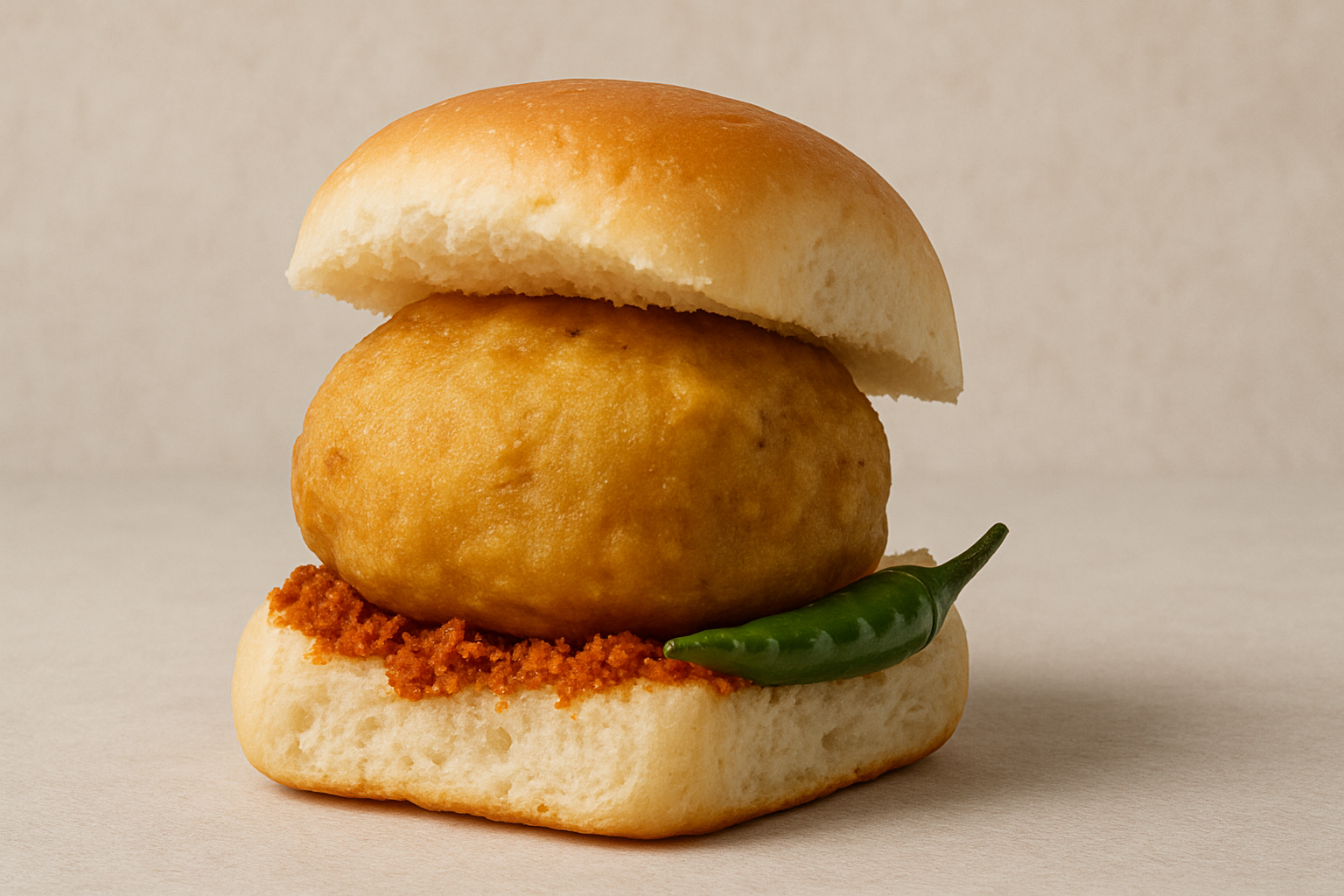
Known as the Indian burger, vada pav is more than simply a common street food; it’s a symbol of Mumbai’s dynamic culture, busy streets, and inventive cooking. Vada Pav, a straightforward but incredibly tasty mix of a spicy, deep-fried potato fritter (vada) and a soft bread roll (pav), has gained national acclaim and is a representation of quick, easy, and tasty cuisine that brings people from all walks of life together.
Vada Pav was created out of need in the 1960s on the busy streets of Mumbai. Because of their hectic schedules, the city’s working class needed a snack that was portable, reasonably priced, and satisfying. This famous delicacy was invented by Ashok Vaidya, a trailblazing street vendor who served mill workers in need of a quick snack by putting a batata vada inside a pav. Vada Pav eventually rose above its modest origins to become an integral aspect of Mumbai’s culture.
The batata vada, a spicy potato filling covered in gram flour batter and deep-fried until golden, is the main ingredient in vada pav. To create a delectably spiced interior, the potatoes are usually cooked and mashed with mustard seeds, turmeric, green chilies, garlic, ginger, and fresh coriander leaves. The silky gram flour batter used to dip this filling crisps up beautifully when fried, providing a crunchy contrast to the soft inside.
The bread bun, or pav, used in Vada Similar to a dinner roll, pav is a soft, slightly sweet bread roll that is the ideal vehicle for the spicy vada. Just before serving, the pav is typically buttered and gently roasted on a flat griddle (tava), giving the snack a slight warmth and richness.
The variety of chutneys and accompaniments offered with Vada Pav is what makes it unique. The traditional trio consists of a sweet tamarind chutney, a fresh green chutney made with mint and coriander, and a spicy red garlic chutney. By adding layers of heat, tang, and sweetness that entice the palate, these chutneys improve the Vada Pav’s flavor profile.
Fried green chili peppers, which are typically served with vada pav, provide people who enjoy their snack an extra heat. Many people find it both reassuring and thrilling to bite into a Vada Pav coated liberally in chutneys and served with a spicy chile.
The worldwide appeal of Vada Pav is among its most intriguing features. In Mumbai, this street cuisine cuts beyond boundaries of geography, language, and class. Vada Pav sellers cover the streets, offering this inexpensive snack to everyone—students, office workers, laborers, and tourists—often at prices that make it cheap. Many people have lifelong allegiances to their favorite vada pav vendors since the snack is so popular.
Vada Pav has sparked innumerable modifications and adaptations over the years. Some merchants add extra herbs or spices to the batter in an experiment. Others add special chutney blends or serve vadas filled with cheese. Gourmet versions that use unusual ingredients or fusion twists—like adding international cheeses, strange sauces, or even baking the vada instead of frying it—may be found in some metropolitan restaurants.
It is impossible to exaggerate Vada Pav’s cultural significance. It is a symbol of Mumbai’s inventiveness and tenacity. The city’s transformation from a tiny port town to India’s financial hub is reflected in the snack’s ascent from an inexpensive street meal to a cultural symbol. Vada Pav is a social phenomenon that unites individuals via common experiences and tastes, not just food.
Additionally, Vada Pav has permeated Indian popular culture, influencing Bollywood music, movies, and literature. It is commonly cited as a representation of Mumbai’s unwavering energy and working-class culture. Vada Pav vendors have turned into local superstars, and their booths act as unofficial gathering places where people exchange tales over light fare.
Although Vada Pav is tasty and satisfying, it should only be consumed in moderation due to its traditional deep-frying and high carbohydrate content. To satisfy health-conscious consumers who don’t want to give up on this beloved snack, many contemporary variations are now experimenting with healthier variants, such as baked vadas, multigrain pav, and reduced-oil chutneys.
The Vada Pav trade is a vibrant micro-entrepreneurial environment from a business standpoint. The sale of Vada Pav provides a living for a large number of small sellers, supporting the local economy and creating jobs for families. Due to its popularity and ease of use, the snack is a great first business idea for small business owners and street vendors across India.
The impact of Vada Pav has also transcended national borders. Vada Pav is a popular snack at Indian restaurants overseas, introducing diners from other countries to the tastes of Mumbai’s streets. It is the perfect global representative of Indian street food culture because of its mobility and simple ingredients.
Although it takes careful attention to detail, making Vada Pav at home is a gratifying experience. To get the correct crispy texture without being greasy, the batter consistency, oil temperature, and potato mixture must all be properly regulated. The experience is further enhanced when the vada is served with freshly cooked pav and handmade chutneys.
Another great illustration of how food may promote socioeconomic equality is Vada Pav. Vada Pav is still a popular and affordable snack in Mumbai, regardless of whether you eat at a fancy restaurant or purchase one from a street seller. It exemplifies the notion that delicious cuisine may be both culturally significant and incredibly fulfilling without being costly or difficult.
A growing concern is the effect that street cuisine like Vada Pav has on the environment. In an effort to promote sustainability, many vendors are now switching to eco-friendly packaging, cutting back on plastic waste, and obtaining supplies locally. These changes show that both buyers and sellers are becoming more conscious of their responsibility to protect the environment.
In summary, Vada Pav is a culinary icon that embodies Mumbai’s vibrant culture, tenacity, and enjoyment of strong flavors. It is much more than just a fried potato sandwich. Its immense cultural significance, which unites people from all walks of life through a common taste sensation, belies its simplicity. Vada Pav is a celebration of everyday pleasure and a representation of India’s rich street food legacy, whether it is consumed in an international setting or on the busy streets of Mumbai.