
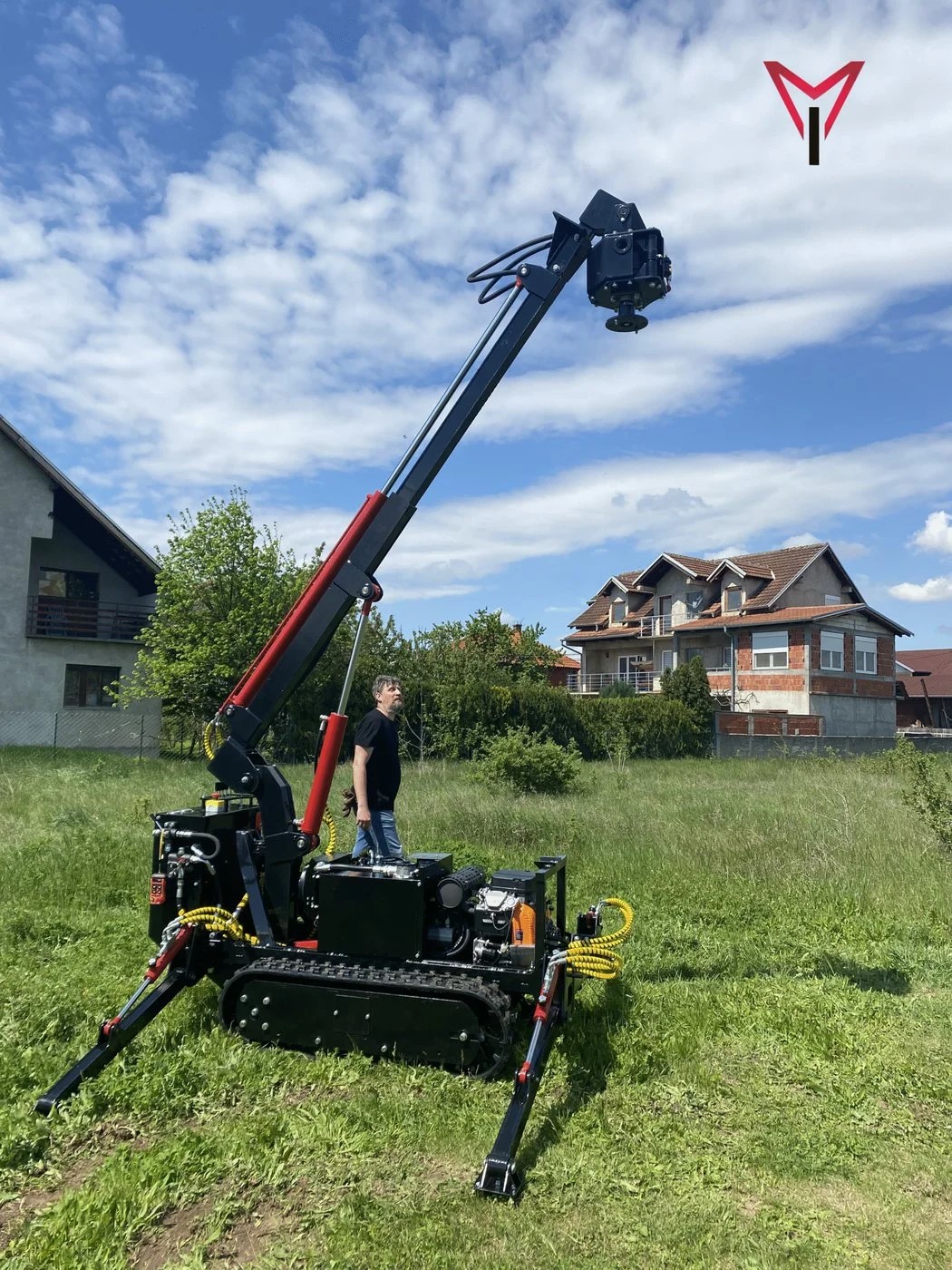
Choosing a ground screw driver is mainly a question of matching the machine to the work it will perform. Contractors often compare equipment by maximum torque first, but this number alone says little about whether a machine will be convenient on real construction sites. Pile diameter, installation depth, soil resistance, access conditions and transport requirements can be equally important. A machine that looks powerful on paper may be inefficient if it is difficult to move between projects or too large for the sites where it will actually be used. The most useful comparison begins with the contractor’s typical workload rather than with the equipment catalogue.
Professional users should also distinguish between occasional installation and regular commercial use. A crew that installs a few ground screws per month has different requirements from a company building screw foundations every week. Frequent use makes reliability, setup time and mobility much more important because small delays are repeated across dozens of projects. It also changes the economics of ownership, since equipment cost can be distributed across a larger number of installations.
The available types of machinery differ significantly in size, construction and operating principle. Contractors can compare dedicated models and configurations at https://iron-mechanics.com/product-category/ground-screw-drivers/ before deciding which class of machine fits their projects. The purpose of such a comparison is not simply to find the strongest driver. It is to determine which machine can consistently install the required screws while remaining practical to transport, operate and maintain.
Start With the Foundation Elements
The first question should concern the ground screws themselves. Different projects use different diameters, lengths and head configurations, and these parameters directly affect installation requirements. A small screw used for a fence does not demand the same machine capacity as a large foundation element intended for a modular building. The larger and deeper the pile, the more important controlled torque becomes.
Contractors should review the range of foundations they install most frequently. If the company works mainly with lightweight decks and fences, a very large hydraulic unit may add unnecessary cost and weight. If the workload includes structural foundations with larger screws, insufficient torque can become a serious limitation. A machine should cover the normal operating range with enough reserve for tougher soil conditions.
The main pile-related parameters to evaluate are:
- typical screw or pile diameter;
- maximum installation length;
- expected installation depth;
- head and adapter requirements;
- likely torque demand;
- frequency of larger or non-standard piles.
This analysis also helps prevent overbuying. Contractors sometimes choose equipment for the largest possible project they might encounter, even if that project represents only a small fraction of their work. In practice, the best machine is often the one that handles routine jobs efficiently while still offering enough capacity for occasional heavier installations.
Torque Must Match the Ground
Torque is one of the most important specifications in screw foundation equipment because it reflects the machine’s ability to overcome soil resistance. As a pile penetrates deeper, resistance can increase sharply. Dense clay, gravel and compacted layers may require considerably more force than loose soil. A machine with insufficient capacity can stall before the pile reaches the intended depth.
At the same time, maximum torque should not be viewed as an isolated performance target. Higher torque usually affects machine weight, hydraulic requirements and structural strength. That can increase transport demands and reduce maneuverability. A contractor working mainly on urban residential sites may benefit more from a balanced machine than from the highest available torque rating.
Reserve capacity remains useful because site conditions are rarely perfectly predictable. Soil investigation may indicate general conditions, but local variations can still appear between foundation points. A machine that operates constantly at its maximum output has less flexibility than one working within a comfortable range. The objective is to have sufficient reserve without carrying excessive size and weight to every project.
Installation technique also affects how effectively torque is used. Correct alignment, stable positioning and gradual application of force can reduce unnecessary stress on both the pile and the machine. Operator experience remains important even when the equipment provides substantial hydraulic power.
Site Access Can Eliminate Otherwise Suitable Machines
A machine may satisfy every technical requirement and still be unsuitable because it cannot reach the installation area. Residential properties frequently have narrow gates, side passages, trees or finished landscaping. Commercial projects can involve restricted areas between existing buildings, utilities or fences. Machine width and turning space can therefore become decisive purchasing criteria.
Tracked machines are often useful in these environments because they combine mobility with a relatively stable operating platform. They can move across uneven ground and reposition between foundation points without requiring a separate towing vehicle on the site. Their actual effect on the surface depends on machine weight and ground conditions, but tracks can distribute weight more evenly than narrow wheels.
Before purchasing equipment, contractors should examine typical access conditions from previous projects. Useful questions include:
- Can the machine pass through common residential entrances?
- How much room does it need to turn or reposition?
- Can the drive head reach close to existing structures?
- What ground conditions can the undercarriage handle?
- Will additional mats or surface protection often be required?
- Can the machine be unloaded near the actual work area?
These practical questions are easy to overlook when comparing technical specifications. Yet they may determine how often the machine can actually be used. Equipment that remains on the trailer because it cannot reach half of the company’s projects provides little value regardless of its torque capacity.
Hydraulic Performance Is More Than a Pressure Number
Ground screw drivers rely heavily on hydraulic performance. The hydraulic system supplies rotational force to the drive head and allows the operator to control installation speed. Pressure and flow therefore need to be considered together. A system with impressive pressure but inadequate flow may behave differently from what a contractor expects during continuous operation.
Hydraulic components also influence durability. Pumps, hoses, fittings and motors operate under substantial loads, particularly during difficult installations. Equipment intended for frequent professional use should allow these components to be inspected and serviced without complicated disassembly. Straightforward access can reduce downtime and make preventive maintenance easier.
Heat management is another factor. Repeated high-load installations can raise hydraulic fluid temperature, especially during intensive work. A well-designed system should be able to operate within its intended range without forcing frequent stops. This becomes more important when the machine is expected to complete dozens of piles during one working day.
Contractors should also consider how easily hydraulic parts can be sourced. A specialized component with long international delivery times can keep otherwise functional equipment out of service. Standardized and accessible components can be an advantage for companies that rely on the machine as a daily production tool.
Transport Costs Affect Every Project
Transport is one of the least visible specifications in an equipment brochure, yet it directly affects operating cost. Machine weight determines what type of trailer and towing vehicle may be required. Overall dimensions influence loading and storage. Local road regulations can also impose limits that change the practical cost of moving equipment.
A heavier machine may provide more stability and power, but those benefits must justify the additional logistical requirements. If every job needs a larger truck or specialized transport, short residential projects can become less profitable. Compact machinery can offer an advantage when it can be moved with equipment the contractor already owns.
Loading and unloading time should also be considered. A machine that can be prepared quickly allows crews to spend more of the day on productive installation work. This matters particularly for companies that visit several small sites rather than remaining on one large project for weeks.
Storage is part of the same calculation. Contractors need sufficient secure space for the machine, attachments and adapters. If equipment requires separate off-site storage, that cost should be included in ownership calculations rather than treated as an unrelated expense.
Think Beyond the Purchase Price
The initial cost of a ground screw driver is only one part of its economic value. Contractors should also consider service intervals, wear parts, fuel use, hydraulic maintenance and expected utilization. A cheaper machine that frequently requires repair can become more expensive than a higher-quality unit over several seasons of work.
Availability has its own value. Owning a reliable machine can reduce dependence on rental schedules and subcontractors. It can also make smaller projects more attractive because the contractor does not need to absorb external mobilization costs every time a few piles must be installed. This flexibility can influence which jobs the company is willing to accept.
Resale value may also matter, especially for companies that replace equipment as their workload grows. Machines with understandable specifications, maintainable components and documented service history are generally easier to evaluate on the second-hand market. Keeping maintenance records therefore supports both reliability and future asset value.
The most appropriate ground screw driver is rarely the biggest or the cheapest option. It is the machine that fits the company’s actual pile sizes, soil conditions, access limitations and project volume. Contractors who evaluate these factors together are more likely to choose equipment that remains productive across many different sites rather than only performing well under ideal conditions.