
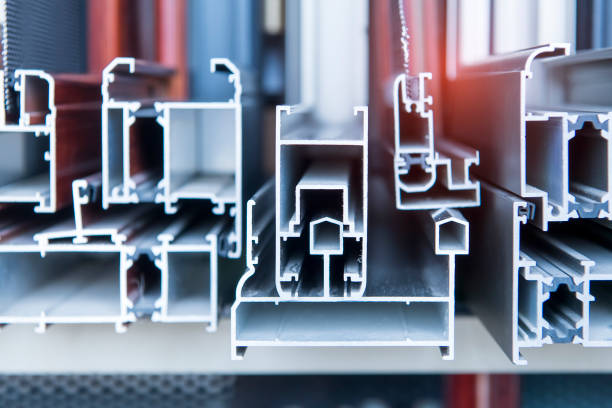
Ingenious engineering often hides in the places people rarely notice. Within a T slot extrusion system, connection methods determine how strong, adaptable, and serviceable a structure will be long after assembly is complete. While the profiles themselves receive much of the attention, the connectors behind the scenes often decide whether a frame remains rigid, adjustable, expandable, or easy to maintain.
Anchor Fasteners Create Hidden Joints With a Clean Exterior Finish
Unlike external brackets that remain visible after assembly, anchor fasteners create concealed connections within the profile itself. This approach allows engineers to maintain a streamlined appearance while preserving structural integrity across the assembly. Many manufacturers choose this method when aesthetics matter alongside performance, especially in automation equipment, machine guarding, and workstations built from MiniTec extruded aluminum framing.
Beneath the surface, anchor fasteners generate secure clamping force between intersecting profiles without interrupting exterior lines. Because no large hardware protrudes from the frame, these joints help reduce snag points while supporting cleaner industrial designs that are easier to maintain and modify.
End Connectors Help Join Profiles Without Bulky Brackets
Across many modular structures, end connectors provide a practical solution for joining profiles directly at their ends. Rather than relying on large corner hardware, these connectors allow two sections of T slot aluminum extrusion to meet in a compact and efficient manner.
Additionally, end connectors help preserve usable space around the assembly. Their low-profile design makes them particularly valuable in equipment enclosures, production fixtures, and machine frames where clearance limitations influence overall design flexibility.
Corner Brackets Offer Quick Assembly for Structural Frames
Among the most recognizable connection methods, corner brackets remain popular because of their simplicity and versatility. Installers can rapidly secure profiles at right angles without extensive machining, making them a common choice for many aluminum framing kit applications.
Beyond speed, corner brackets provide excellent visibility during assembly and inspection. Maintenance teams often appreciate the accessibility these connections provide because adjustments can typically be performed without disassembling large portions of the structure.
T Nuts Allow Components to Be Repositioned Without Rebuilding
Few features illustrate the adaptability of extruded aluminum T slot systems better than T nuts. These small components slide directly into profile channels, creating attachment points wherever they are needed along the frame.
Rather than drilling holes or fabricating new supports, users can reposition accessories, guards, shelves, sensors, and panels with minimal effort. This flexibility helps manufacturers adapt equipment layouts as production needs change over time without rebuilding entire structures.
Gusset Plates Add Stability Where Heavy Loads Are Expected
Whenever higher structural demands exist, gusset plates often become an important reinforcement option. These triangular support components distribute loads across a larger surface area while increasing rigidity at critical connection points.
Under demanding conditions, gusset plates help reduce deflection and movement that could affect equipment performance. Engineers frequently incorporate them into heavy-duty assemblies where aluminum framing material supports larger loads, dynamic forces, or repetitive operational stresses.
Inside Connectors Keep Frame Corners Clean and Unobstructed
Certain applications require unobstructed exterior surfaces free from brackets and exposed hardware. Inside connectors address this need by securing profiles internally while preserving clean outer dimensions throughout the frame.
Meanwhile, equipment designers benefit from improved accessibility around the assembly. Smooth exterior corners can simplify panel installation, reduce interference with adjacent components, and create a more refined finished appearance throughout the structure.
Pivot Connections Support Adjustable Framing and Moving Assemblies
Not every connection requires complete rigidity. Pivot connections allow controlled movement between profiles, making them valuable for adjustable workstations, hinged guards, access panels, and ergonomic equipment systems.
Instead of locking components into fixed positions, these specialized connectors create motion where needed while maintaining stability. Their ability to combine flexibility with structural support expands the capabilities of many T slot extrusion applications beyond traditional static framing.
Hybrid Connection Methods Balance Rigidity With Future Modifications
Complex projects often benefit from combining multiple connection styles within a single assembly. Engineers may use anchor fasteners for aesthetics, gusset plates for reinforcement, and T nuts for adaptability depending on the requirements of each section.
Ultimately, successful frame design rarely depends on one connector alone. Minitec Solutions helps manufacturers, integrators, and engineers evaluate connection strategies, profile configurations, and MiniTec Aluminum Framing systems that balance strength, flexibility, serviceability, and long-term performance across a wide range of industrial applications.